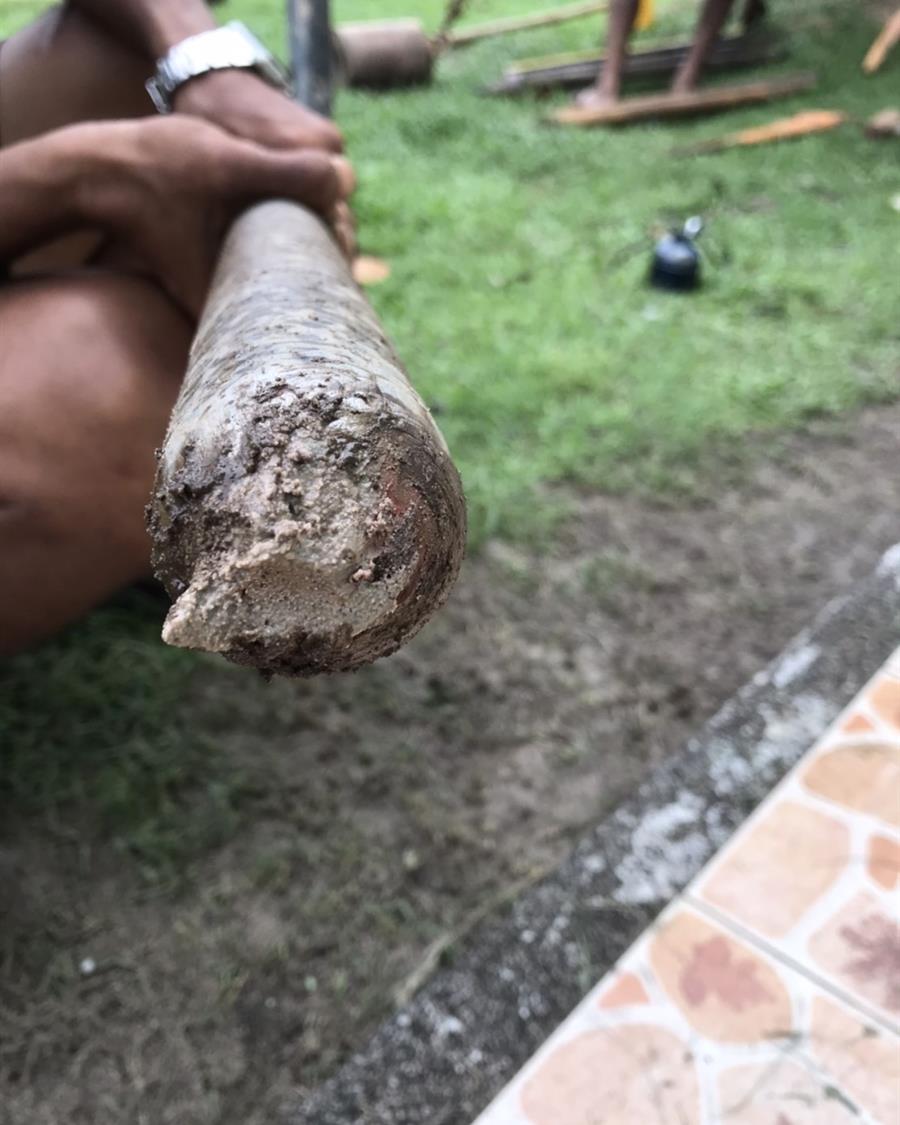
Know your ground before the first pile goes in

Phuket Soil carries out SPT soil investigations across Phuket and Phang Nga, from hillside pool villas to beachfront condominiums. Every report is signed by a licensed civil engineer, so your designer can choose the right foundation from the start.

Test standard
ASTM D1586
Typical depth
15–30 m
Reports signed by
Professional and senior civil engineers
Sample boring log, borehole BH-1 Soil layers from the surface to 30 metres: fill, loose silty sand, soft sandy clay, medium dense clayey sand, residual soil from weathered granite, and granite. The N-value rises from 5 to over 50 at 22.5 metres. Groundwater is at 2.4 metres.
BoreholeBH-1 sample
Depth0.0 m
N-value–
LayerFill

Soil investigation and testing in Phuket

Every job ends with a report signed by an engineer, whether it is one house or a multi-building project.

SPT soil boring

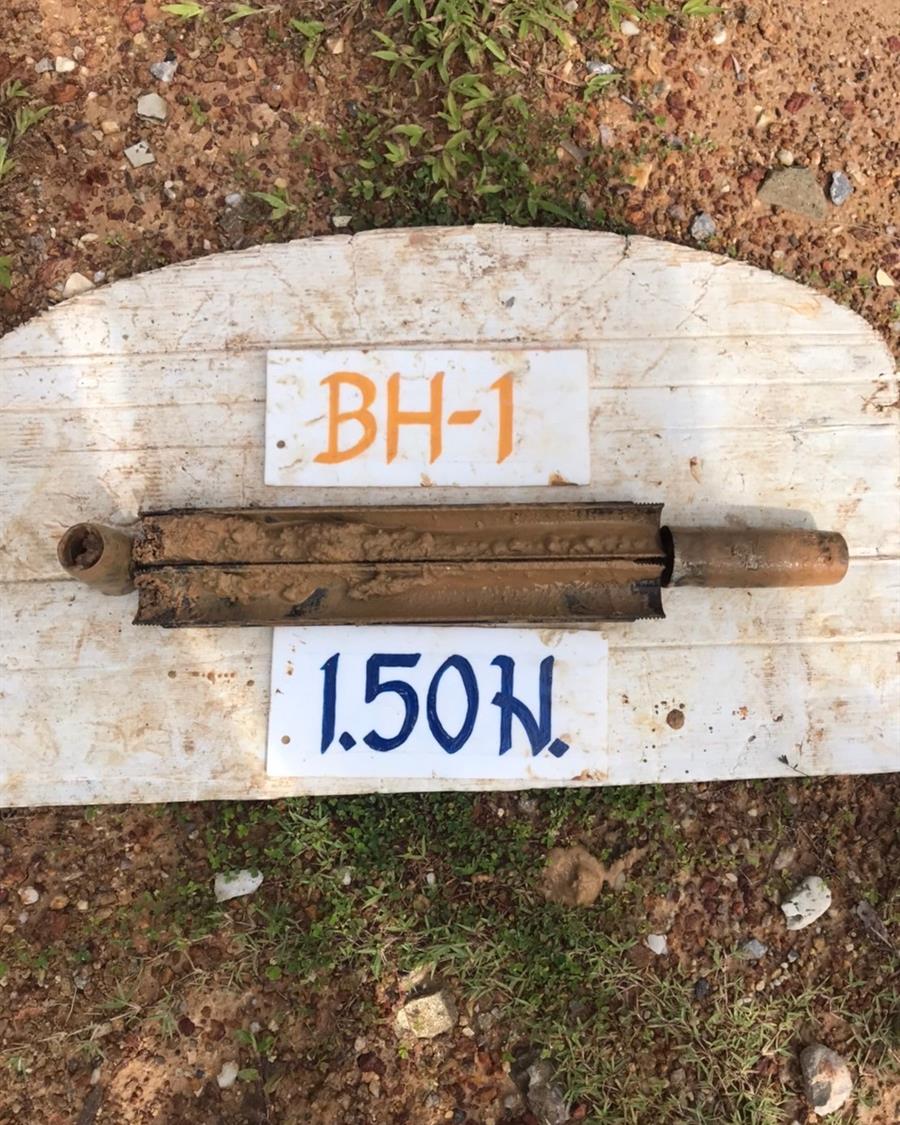
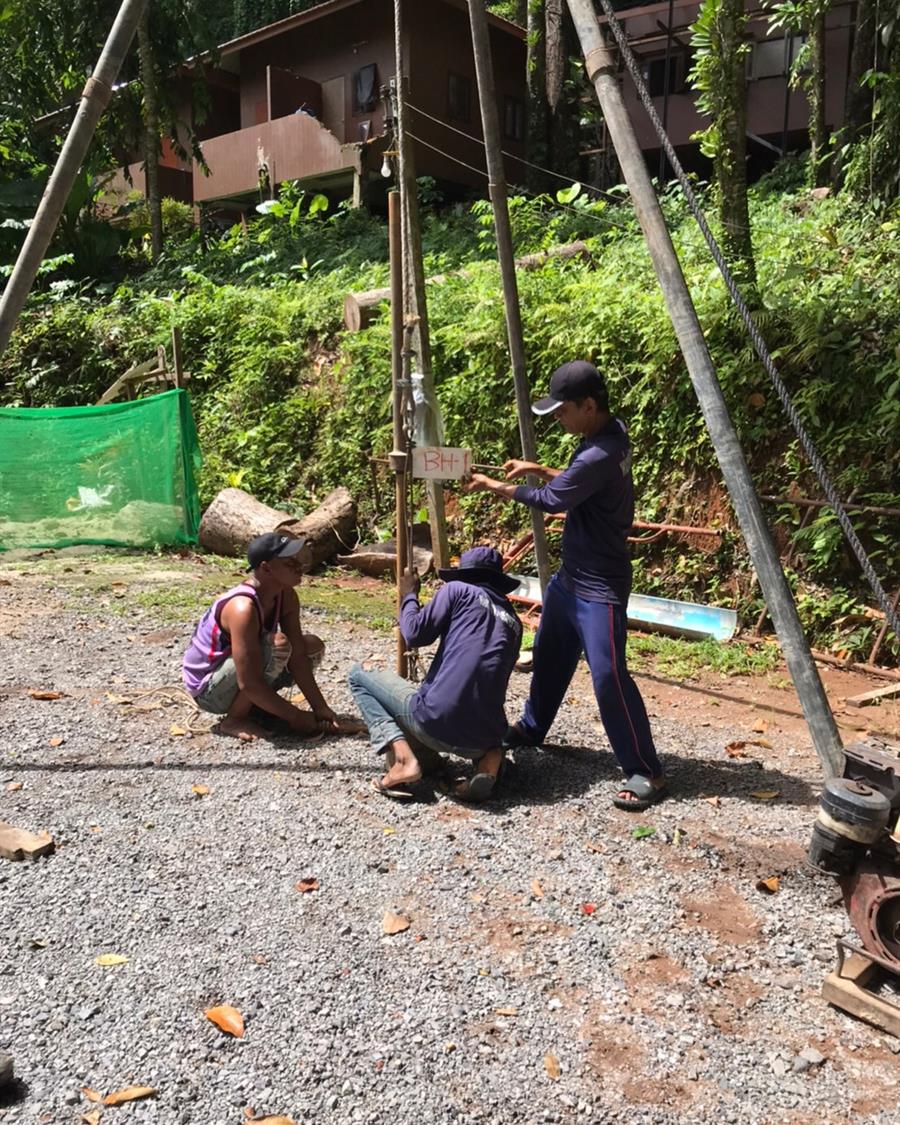
We drill by wash boring and run a Standard Penetration Test every 1.5 metres, sampling every layer for laboratory testing. Soft clay is sampled undisturbed with thin-walled Shelby tubes, and when we reach rock we take cores to confirm it before drawing conclusions.

What you receive

  • A boring log for every borehole
  • Groundwater level
  • Allowable bearing capacity of the soil
  • Recommended pile type and length
Typical depth
15–30 m, or until N exceeds 50
Test interval
Every 1.5 m
Standards
ASTM D1586, ASTM D1587
Rigs
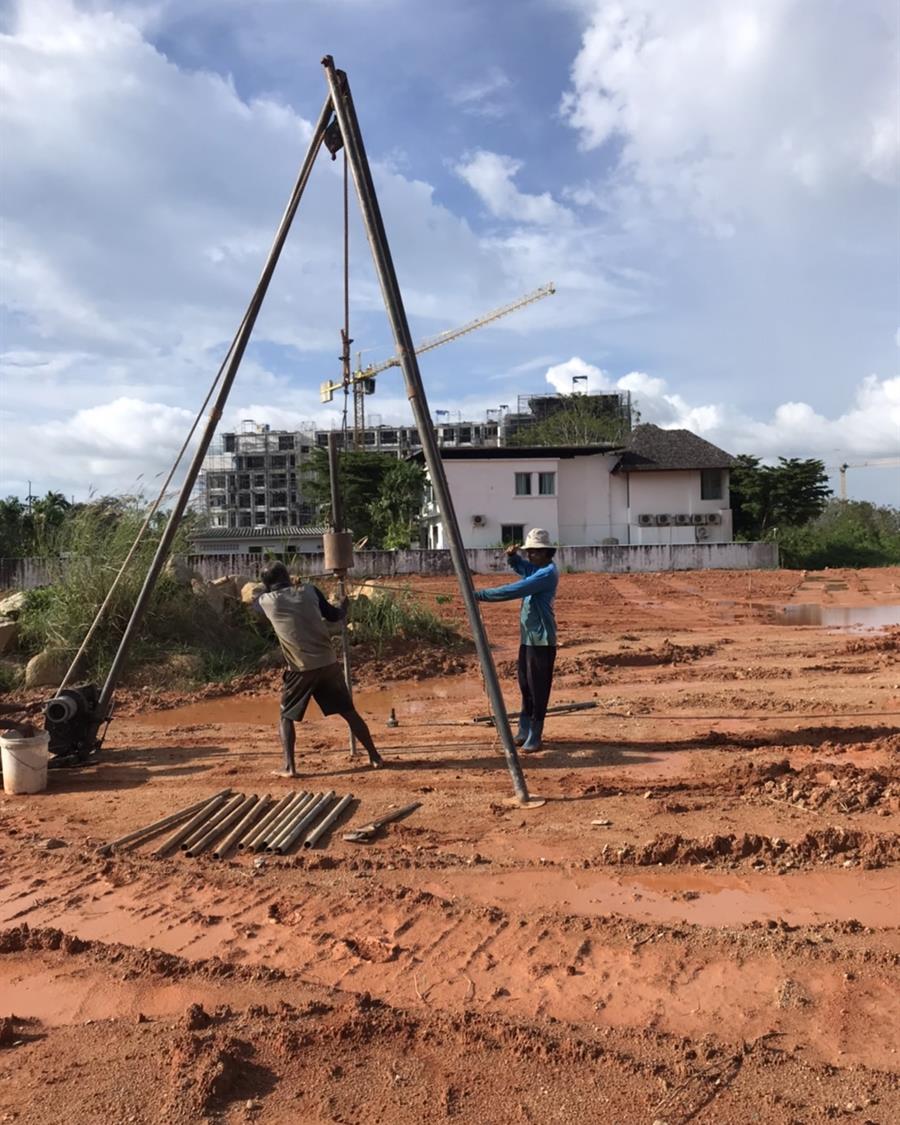
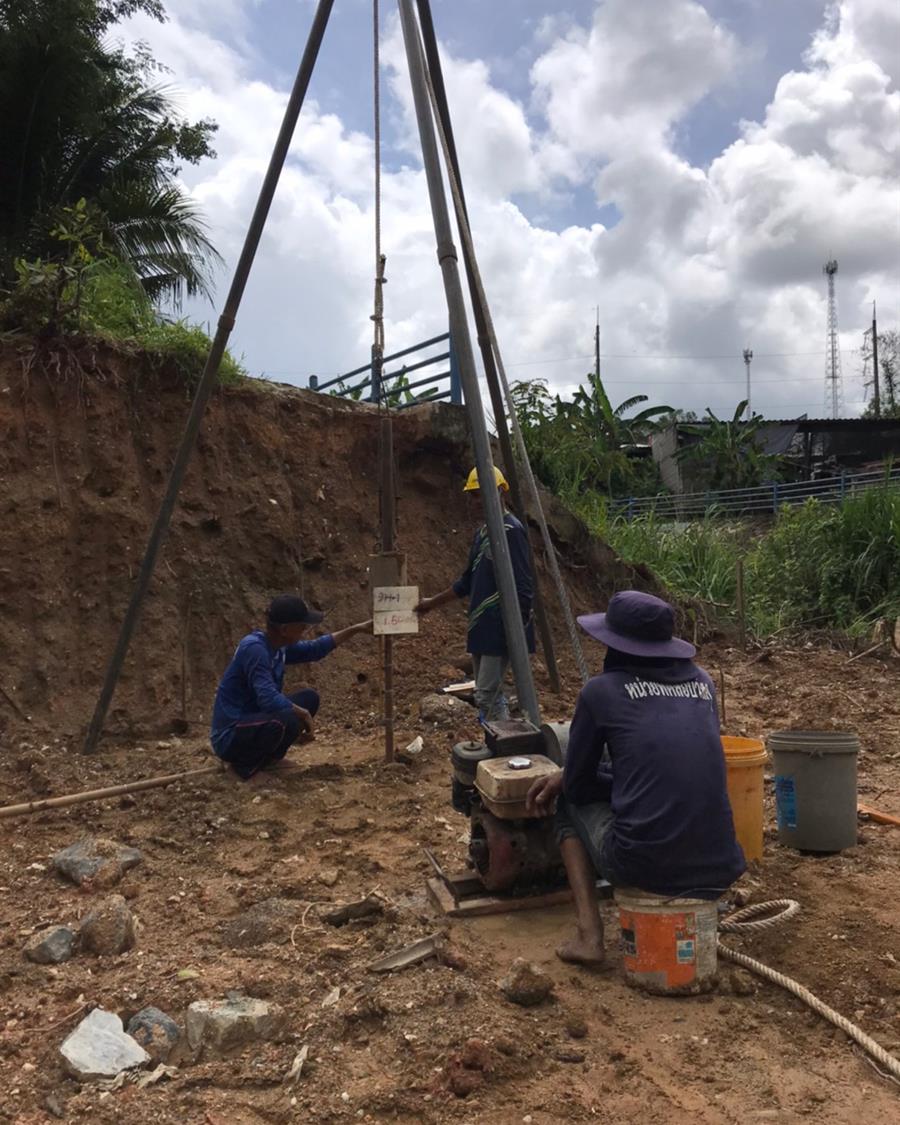
Tripod rigs that can be carried into narrow lanes, onto slopes and out to islands

Laboratory soil testing

We classify the soil and measure its engineering properties from the samples, for foundation and settlement calculations.

Moisture content, Atterberg limits, grain size (USCS), unconfined compression, direct shear, consolidation

Plate bearing and field density

We load a steel plate on site to measure bearing capacity for shallow footings, warehouse slabs and roads, and check fill compaction with the sand cone method.

Plate load test, sand cone (ASTM D1556)

Pile testing

We check pile integrity with seismic testing and measure capacity with dynamic or static load tests before the foundation is handed over.

Seismic integrity (ASTM D5882), PDA (ASTM D4945), static load (ASTM D1143)

How the SPT works

The SPT measures how dense or stiff each soil layer is by counting the hammer blows needed to drive a sampler into it. That count is the N-value, which engineers use to estimate bearing capacity and pile length.

  1. Drill down to the test depth

    Water flushes soil out of the borehole down to the test level without disturbing the soil below.

  2. Drop a 63.5 kg hammer from 76 cm

    The hammer drives a split-spoon sampler 45 cm into the soil, and the blows are counted in three 15 cm increments.

  3. N is the sum of the last two increments

    The first increment only seats the sampler through disturbed soil, so it is not counted. If 50 blows drive the sampler less than 30 cm, the test is recorded as refusal, such as 50/15.

  4. Send the sample to the lab

    The soil in the sampler is sealed, labelled with its depth and sent to the laboratory for classification and testing.

Count an N-value yourself

Drop the hammer one blow at a time and watch how far the sampler sinks in each increment.

Blows counted in each 15 cm increment
0–15 cmSeating, not counted0
15–30 cmCounts toward N0
30–45 cmCounts toward N0

Drop the hammer to start counting

Reading the N-value

Sand: density
N-valueCondition
0–4Very loose
4–10Loose
10–30Medium dense
30–50Dense
Over 50Very dense
Clay: consistency
N-valueCondition
0–2Very soft
2–4Soft
4–8Medium
8–15Stiff
15–30Very stiff
Over 30Hard

After Terzaghi and Peck. A first guide only: foundation design also needs laboratory results.

Phuket's ground changes across the island

Phuket has granite hills, beach plains and old tin-mining land, and each gives very different boring results. A team that knows the island plans the number and depth of boreholes more accurately.

Granite hillsides

Kathu, Kamala, Kata, Patong, Khao Rang

The soil is weathered granite and often holds large boulders. The N-value can jump as if rock had been reached when it has not, so we core further to confirm before the pile length is set.

Beaches and coastal plains

Bang Tao, Rawai, Mai Khao, Nai Yang

The upper beach sand is loose, and the water table is shallow and changes with the season. Both affect the choice of pile and how the footings are excavated.

Old tin mines and mangroves

Kathu, Saphan Hin, the east coast

Many old tin-mine pits were backfilled unevenly, and the east coast has soft clay. N stays very low for several metres, so boreholes need to be closer together and deeper.

Typical profiles for illustration, not results from real projects.

How we work

From sending your site location to receiving a signed report.

  1. Send the location and plans

    Send a Google Maps link, the number of floors and the building size on LINE or through the form below. No plans yet? The plot size is enough to start.

  2. Get a quote

    An engineer recommends the number and depth of boreholes, with a price. You can send a request at any time.

  3. Drill on site

    The crew arrives on the agreed date. Drilling time depends on the number of boreholes, their depth and the soil.

  4. Test in the laboratory

    Samples from every layer are tested to ASTM standards.

  5. Receive the signed report

    PDF and bound copies, on the date set out in your quote.

Recent projects

Since 2022 we have drilled for more than 70 projects across Phuket, Phang Nga and Ranong, from schools, hospitals and national park facilities to private homes and buildings.

Selected projects

  • Private project, 4 boreholesWichit, Phuket, SPT, 4 boreholes2025
  • 3-storey classroom building, Takua Pa Senanukul SchoolTakua Pa, Phang Nga, SPT, 3 boreholes2024
  • 8-storey buildingPatong, Phuket, SPT, 2 boreholes2024
  • Waste building, Takua Thung HospitalTakua Thung, Phang Nga, SPT, 2 boreholes2024
  • Satree Phang Nga SchoolMueang Phang Nga, SPT, 1 borehole2024
  • Pool villaKhok Kloi, Phang Nga, SPT, 2 boreholes2024
  • Private project, 15 boreholesPatong, Phuket, SPT, 15 boreholes2023
  • Tourism development, Khao Lak–Lam Ru National ParkKhao Lak, Phang Nga, SPT, 2 boreholes2023
  • Assembly hall, Anuban Si Sunthon SchoolThalang, Phuket, SPT2023
  • Koh Yao Yai subdistrict health hospitalKoh Yao, Phang Nga, SPT2023
  • Stream bridgeKapong, Phang Nga, SPT2023
  • Service centre, Hat Som PaenRanong, SPT2023
  • Patong hill roadPatong, Phuket, SPT, 4 boreholes2022
  • VillaKoh Yao Noi, Phang Nga, SPT, 6 boreholes2022

The report you receive

Every borehole gets a detailed log like this one, with conclusions your designer can use straight away.

  • Borehole location plan
  • Boring logs and soil profile
  • Laboratory test results
  • Groundwater level
  • Allowable bearing capacity
  • Recommended pile type, size and length
  • Site and sample photos

Certifying engineers

  • ปณิธาน ปัญญาจริวัฒน์Professional Civil Engineer, licence สย.13319
  • ธรรมนูญ เทพจันทร์Senior Professional Civil Engineer, licence วย.1401
Soil Boring Log Phuket Soil
Project
2-storey house (sample)
Location
Choeng Thale, Thalang
Borehole
BH-1
Method
Wash boring with SPT
Groundwater
−2.40 m
Total depth
30.0 m
Depth (m)SymbolSoil descriptionUSCSSampleN-value
0.0–1.0Fill, brown gravelly sand–––
1.0–5.5Loose silty sand, light greySMSS5–9
5.5–10.5Soft to medium sandy clay, greyCLSS, ST4–7
10.5–16.5Medium dense clayey sand, yellowish brownSCSS13–26
16.5–22.5Dense residual soil from granite, reddish brownSMSS32–46
22.5–27.0Highly weathered granite–SS50/25–50/10
27.0–30.0Moderately weathered granite–RCRQD 62%
SS split spoon, ST Shelby tube, RC rock core
Certifying engineerSignature with licence number

Common questions

Can't find your answer? Ask our engineers directly on LINE.

How many boreholes do I need?

It depends on the size and load of the building. A typical one or two-storey house needs one or two boreholes; taller buildings and larger sites need more, laid out to the building plan. The engineer recommends a number in the quote.

How deep do you drill?

Usually 15 to 30 metres, or until N stays above 50 over several tests. Hillside sites that reach rock early can be shallower; old mining land and soft clay usually need to go deeper.

How long does it take?

It depends on the number and depth of boreholes and the laboratory tests needed. The engineer sets out the drilling dates and the report date in your quote. If your project is urgent, tell us at any time.

What does the price depend on?

The number and depth of boreholes, site access such as steep slopes or narrow lanes, and the laboratory tests required. Send the site location and building details and we will send a firm price.

What do I need to prepare before drilling?

Access for the rig, a water source for wash boring, and pegs or a plan showing the building position. Our rigs are tripods that come apart, so we can carry them into narrow lanes, onto slopes and out to island sites.

Can the report be used for a building permit application?

Reports are signed by a civil engineer licensed by the Council of Engineers Thailand and can be used for foundation design and included in a building permit application.

Do you issue reports in English?

Yes. We can issue reports in English, which suits foreign owners and architects.
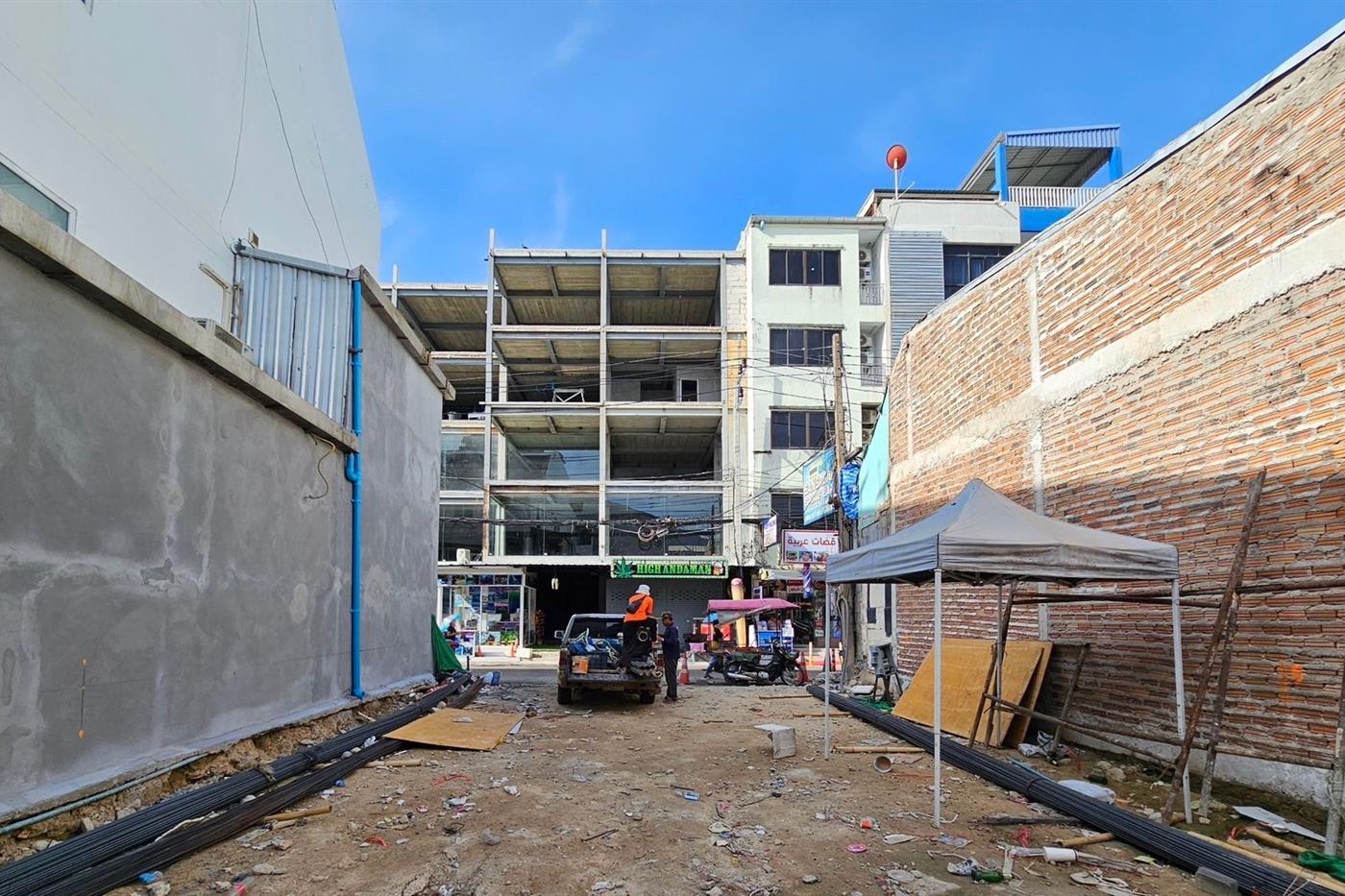
Request a quote

Tell us where the site is and what you plan to build. An engineer will reply with the recommended boreholes and a price. You can send a request at any time.

Subdistrict and district, or paste a Google Maps link

Services needed

Such as plot size, site access, or when you need drilling to start

We only use these details to reply about your quote.